The MISTRAL project marked an important milestone this year with its first participation in the European Public Health Conference (EPHC)—a major forum for advancing research and dialogue on public health challenges across Europe.
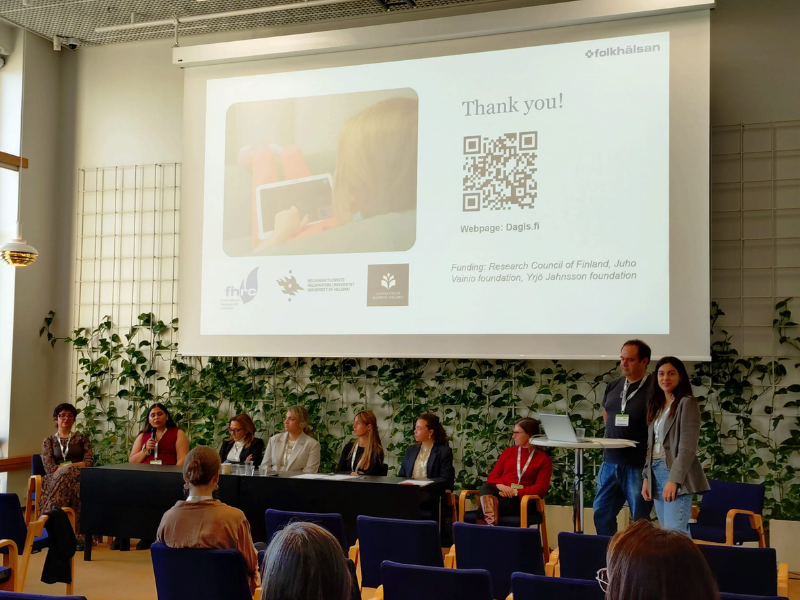
Our researcher Roberta Zupo contributed actively to the event, both by chairing the session on Social Determinants and Maternal, Child Health and by presenting emerging findings from our work on environmental exposures.
Sharing MISTRAL’s Evidence on Air Pollution and Depression
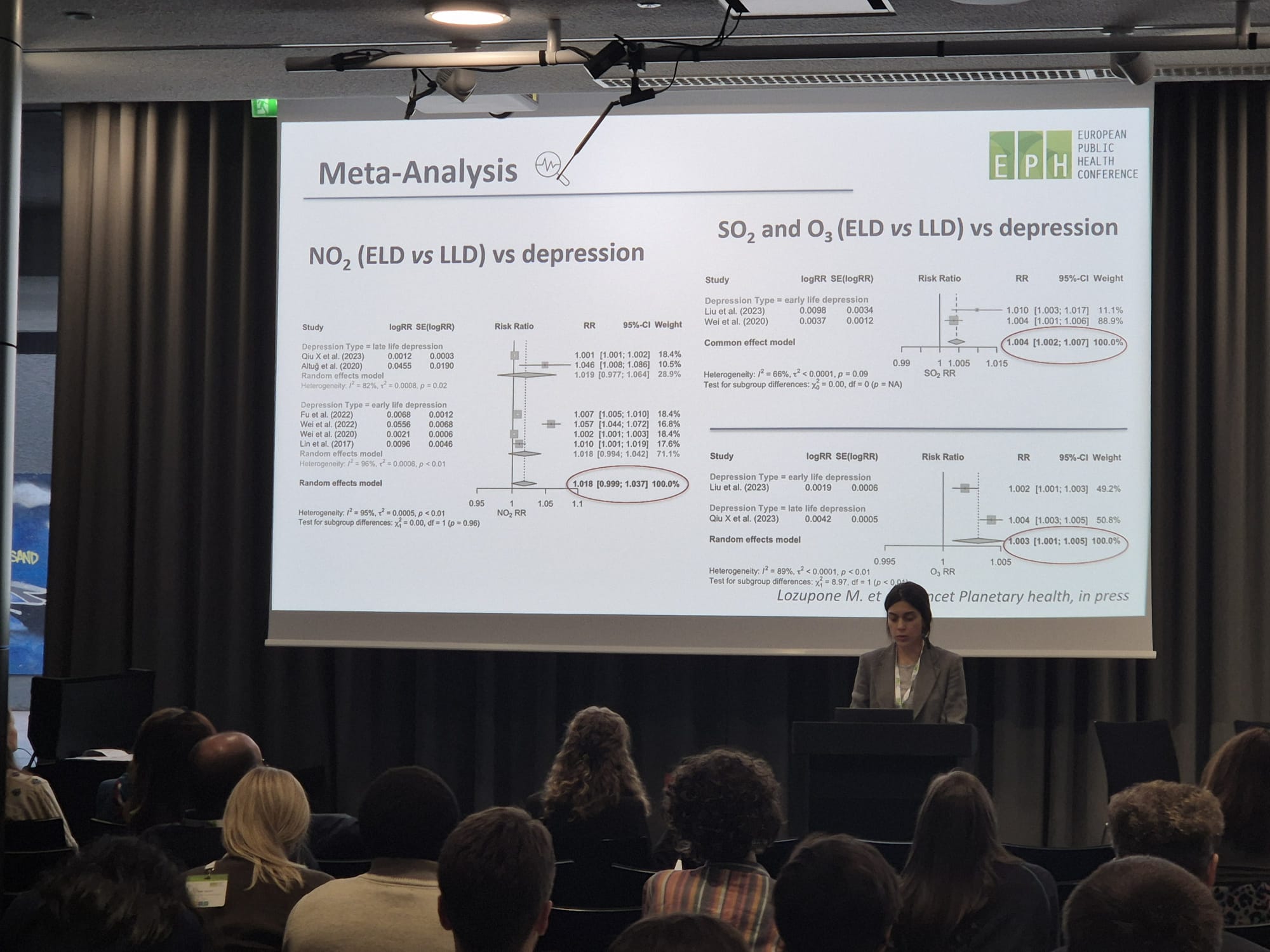
Roberta’s presentation, “Air Pollution exposure, socio-economic factors and early-onset depression,” synthesised results from a large systematic review and meta-analysis of over 17 million individuals. The study confirms a growing body of evidence linking environmental pollution to mental health outcomes throughout the life course.
Key findings include:
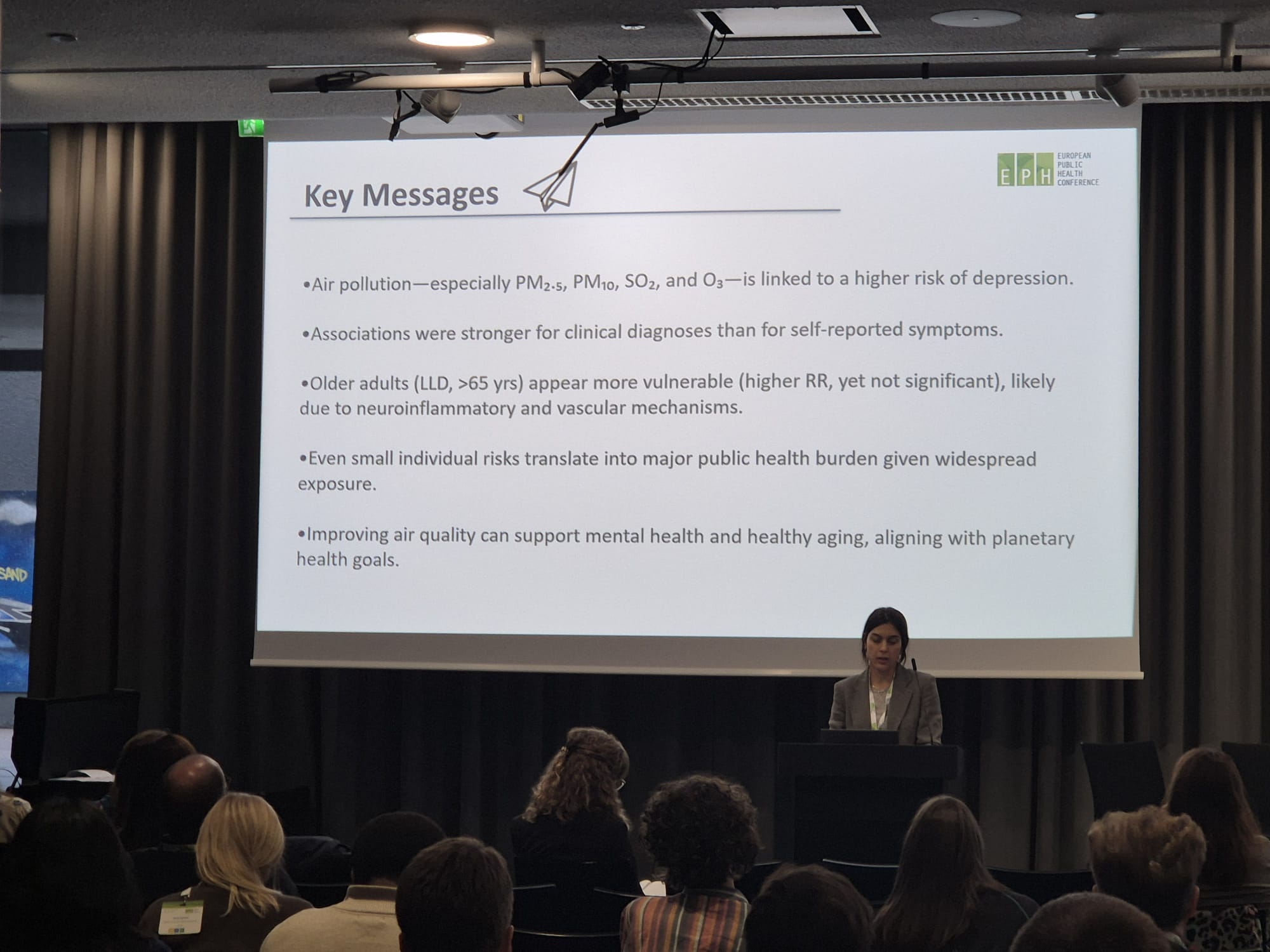
- Air pollution — particularly PM₂.₅, PM₁₀, SO₂ and O₃ — is associated with a higher risk of depression.
- Associations are stronger when depression is clinically diagnosed rather than self-reported, pointing to robust underlying mechanisms.
- Older adults (>65 years) appear more vulnerable, potentially due to neuroinflammatory and vascular pathways, although results are not yet statistically significant.
- Even small increases in individual risk translate into substantial public health burden, given the widespread exposure of urban populations to air pollution.
- Improving air quality is a mental health intervention — supporting healthy ageing and aligning with the broader goals of planetary health.
These insights reinforce a core message of MISTRAL: environmental exposures must be integrated into public health strategies to better understand, prevent, and manage chronic conditions — including mental health disorders.
A Meaningful First Presence for MISTRAL
Participating in the EPH Conference allowed us not only to present scientific results but also to connect with researchers, policymakers, clinicians, and civil society actors interested in the intersection of environment and health.
This first appearance has strengthened MISTRAL’s visibility in the European public health community and affirmed the relevance of our data-driven, federated approach to assessing urban health risks.
As we continue our work, the evidence shared at EPHC will support the development of MISTRAL’s modelling framework, helping cities better anticipate the long-term health impacts of pollution and design more effective, equitable policies.